
Living in Pori
Read on to get some helpful tips to get settled into your new life in Pori, including info on renting, driver’s licenses, public transport, setting up a bank account and more!
Click directly to the content:
Renting
In Finland, housing options include rental (vuokra-asunto), right-of-occupancy (asumisoikeusasunto), or owner-occupied (omistusasunto) homes. In Prices are generally higher in larger cities compared to smaller towns.
The usual rental deposit is equal to either 1x or 2x the monthly rent of the apartment. It is quite common to have a one-year contract, and if you terminate the lease before the end of the term, a fee for breaking the lease is required – although some accommodations have no fixed term before being able to end the contract. READ YOUR CONTRACT CAREFULLY BEFORE SIGNING – IT IS BINDING. Additionally, the standard notice period for ending the lease is one month (approximately 30 days) but can vary.
Rental homes are advertised online by cities, municipalities, private companies, and individual landlords. Be prepared to only be able to see a few apartments each week, as tenants must be given ample notice that a unit will be shown. Often, empty apartments will hold group showings, often visible in the listing. Almost without fail, the resident must pay the deposit and show proof of home insurance before receiving the keys. Keep in mind that apartments in Finland do not include lamps, curtains or other furniture and accessories, unless otherwise specified.
Please be aware, that most landlords will not rent to foreigners still living abroad, since the contract is not enforceable across borders. Be prepared to secure temporary accommodations until you can rent an apartment. A great resource to find temporary housing is through the Facebook groups (International Students in Poria and International Pori People).
Some short term rentals or apartment hotels available in Pori are:
Where to find available housing?
There are several websites for advertising rental housing in Finland:
If you are a student
Porin YH-Asunnot Oy provides affordable and comfortable student housing options, including shared apartments, studios, and 1-2 bedroom units in Pori.
Settling Into Your Apartment: What Every Tenant Should Know
- Acquire home insurance: insurance can be obtained through many different providers and is required when renting. It not only covers losses to personal property in the home as well as items such as bicycles and cell phones, but damage caused accidentally within the unit. Home or renter’s insurance can be purchased as basic or full coverage. Most landlords require full coverage insurance – check your rental contract or ask your landlord.
- Connect utilities: some common utilities may include water, electricity and/or heating, parking (with or without power), sauna days, personal garage stall, internet service and cable TV. Some apartments include this in the rent; some add it on to the rent and some require you to get your own service provider. Sometimes utilities, such as water are listed at a set rate per person per month and are usually paid to the landlord with the rent. NB! Heating can be a major expense during the winter months. Ask for approximate heating costs if they are not included in your rent (kaukolämpö).
- Getting the keys: be prepared to show your proof of insurance and receipt of payment in order to get your keys. If your landlord agrees to do the initial walk-through with you, it will help avoid surprises later. If not, try to film a walkthrough on your phone before moving items into the apartment to point out broken, damaged or worn areas. You may have to report these in writing to the rental agent within a specified time.
- Follow House Rules: in your move-in papers, you will find the house rules regarding things like smoking, pets, quiet times, sorting trash, and common area usage. If you are reported to break the rules often, you might face fines or eviction.
- Many different entities are involved in apartment building living: the apartment owner, the landlord, the rental agency, the maintenance company and maybe even some other company. Each entity covers a different aspect of your apartment. Be sure to read your contract and any additional information carefully to find out who to contact in every situation. Make sure you also store the contact information of these entities in your phone, in case you are locked out or need help when you cannot otherwise get the information.
- Using shared facilities: In apartments, there are often shared facilities which might include areas such as storage cages, laundry facilities, saunas, bike storage room, drying room, etc. Remember, you are responsible for your own use and cleaning of the shared facilities. Try to be mindful that other people also need the facilities and sometimes, there is a sign-up sheet or even an additional cost associated with use.
- It is the responsibility of the tenant to inform the management if they see an issue in the building. Make sure you are aware of your surroundings to ensure a comfortable living environment.
- Leaving: understand how to end your lease if you need to. Usually, this must be in writing, but for many landlords, an e-mail will be accepted. Know the rules for giving notice and any fees you might have to pay.
-
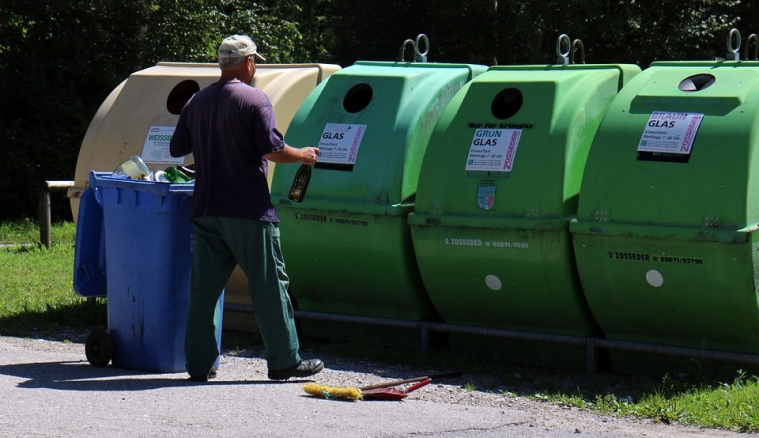
Sorting household waste is required in Finland. Sorted waste can be recycled or reused to save natural resources and money. Waste provides raw materials for new products, reducing the need for additional landfill sites. Incorrectly sorted waste increases treatment costs and slows down processing. Separate waste containers in kitchens make sorting easier. Almost all housing companies have waste collection points with bins for different types of waste:
- Biowaste (biojäte): food scraps, coffee grounds, tea leaves, spoiled food, eggshells, fish waste, small bones, used paper towels
- Cardboard (kartonki): cardboard food packaging, cardboard boxes, milk and juice cartons
- Paper (paperi): newspapers, magazines, flyers, envelopes, books without covers – only things that would come through your mail slot, not dirty paper
- Glass (lasi): glass jars and bottles, but not ceramic!
- Metal (metalli): cans, aluminum foil, metal items
- Mixed waste (sekajäte): non-recyclable items
- Specialty items are recycled at specialized collection points include:
- electronics (SER = sekainen elekrooninen romu) by law, small electronic waste must be accepted by stores that also sell small electronics
- printer ink cartridges – collection boxes near new printers and printer ink in stores like Prisma or K-Citymarket
- batteries – must be taped at both ends to reduce risk of fire, most stores, some housing associations will have collection boxes
- Lightbulbs – stores like Gigantti, K-rauta or Power accept most of these specialty recycling types
- Dangerous waste – strained frying oil, motor oil, paints and stains, ethanol and the like, MUST GO TO A RECYCLING CENTER!
- Medical waste – left over medicines, syringes, etc. go to the pharmacy to be recycled
Mixed waste is burned to make energy. Hazardous waste, like car batteries and medicines, should be taken to special collection points to keep the environment safe. You can take recyclable waste from home to Keräämö recycling points, sorting stations, or Rinki eco points
Getting around
-
Walking to get where you need to go is an acceptable way to get around in Finnish cities. Sidewalks are often accessible and most GPS mapping systems have mostly accurate routing here. Part of Finnish heritage is a concept of “everyman’s rights”
-
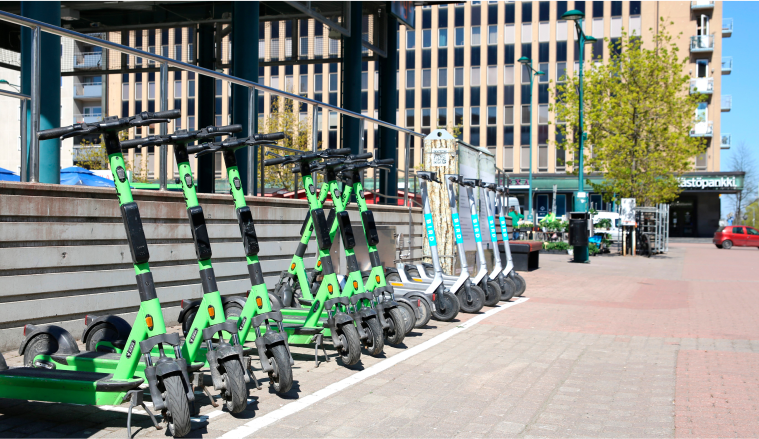
Electric scooters from Ryde and Bolt are available in Pori. To rent these scooters, you’ll need a smartphone app with the same name as scooter. You must input a debit or credit card into the app, which will be charged according to your usage. The app will locate the nearest scooter, and you can start using it by scanning the QR code on the scooter. In Pori, there are approximately 350km of walking and cycling paths in the network.
Electric scooters are classed as electric bicycles and must be ridden in the bicycle lane or on the right edge of roadways, not on the sidewalk where people walk. Maximum speed is limited to 25 km/hour in less populated areas and 10-15 km/hour in densely populated areas, such as in the city center – specifically Yrjönkatu’s sections that are called the walking street (kävelykatu) and the market square (tori). You can recognize these areas, as they are in-laid with pavers.
Link to map of lowered speed areas.
-
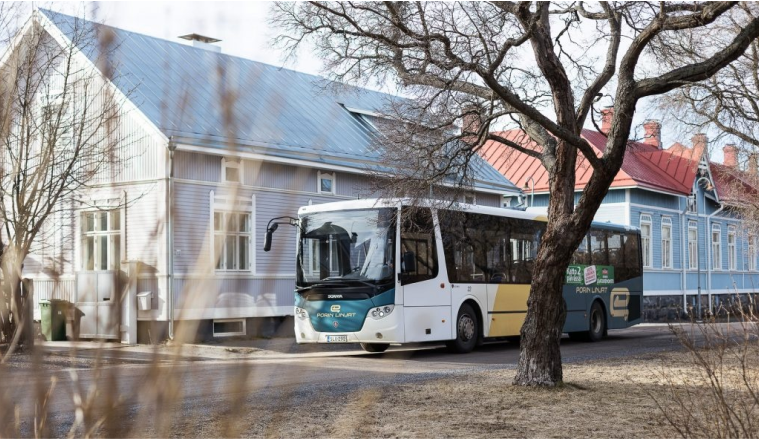
You can view the bus schedules here. You can also follow the public transport schedules using the Waltti Mobile app. The app and the website also provide notifications about possible disruptions. Current schedules can always be found on this website. Public transport tickets can be purchased from the driver with cash, contactless payment, the Waltti Mobile app, or the Waltti online store. A physical Waltti card costs a non-refundable 7€ and can be purchased and loaded at Pori’s Customer Service in Leijona. Check location and business hours in the middle of this page (Finnish only). Prices for all types of tickets can be found here.
-
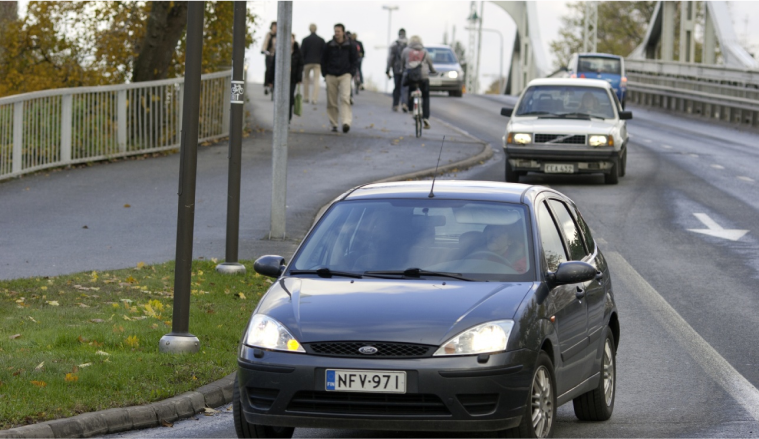
Most people moving to Finland can exchange their foreign driving license for a Finnish one, with some exceptions. Check if you need to change your license here. Those from countries in the Road Traffic Convention (()) can use their national license in Finland for two years. It’s recommended to get an International Driver’s License before arriving.
Drivers from EU or EEA countries can use their valid license in Finland until it is close to expiration. You can book an appointment or find your closest service center on their website.
-
Here are some companies that rent cars in Pori:
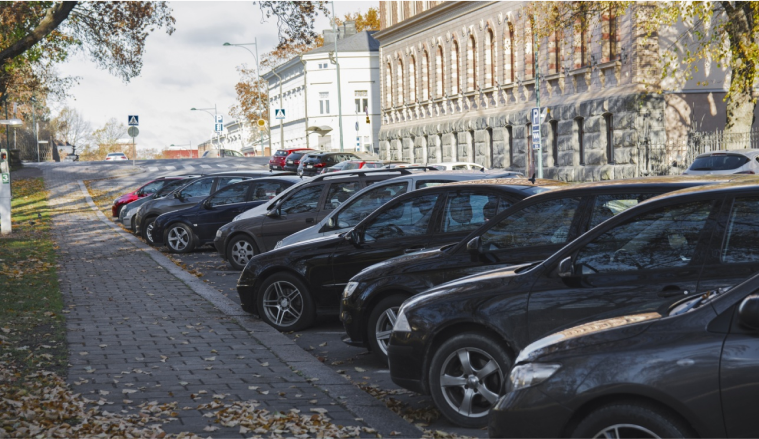
When parking in the city, parking limits are listed on a sign at the beginning or entrance of the parking area. The signs determine whether the spot is time limited, metered or without restriction. If there is no sign, there is no restriction to parking. Be careful, there are parking ticketing agents who walk the city checking cars during weekdays 8 a.m. until 6 p.m. Parking fines are easily avoided, they are expensive! Check parking zones here.
Parking is generally charged on weekdays from 8 am to 6 pm and on Saturdays from 8 am to 4 pm. Sometimes, there are Sunday times, but they are defined by the specific place. You can pay for parking with coins, cards, or use Easypark or Parkman apps. Monthly permits can be purchased directly from parking meters or from Pori’s Customer Service in Leijona. Check location and business hours in the middle of this page (Finnish only). If you receive a parking ticket for incorrectly parking, the parking violation fee is 50 euros, more information about parking can be found here (Finnish only).
Opening and Using a Bank Account in Finland
Most large banks in Finland offer services in English. Online banking is by far the most common form of banking in Finland and is often used as a form of online identification. Many businesses no longer accept cash and online banking credentials are necessary to make online payments, unless you pay high transaction fees at places such as R-kioski.
To open an account, you’ll need to visit your chosen bank in person. To schedule an appointment, check the bank’s website and request one online. If you don’t speak Finnish or English, it’s important to bring a licensed interpreter with you. The bank will ask you to provide all required documentation, which varies among banks.
Once you have opened an account, you can request bank statements in English, Finnish, or Swedish, along with online banking codes for remote access, activate strong electronic identification methods, and ask for instructions for using your bank card and bank application.
Many banks also no longer handle cash, so check beforehand if you plan to deposit cash regularly. Cash points/ATMs (pankkiautomaatti) are branded Otto and Nosto. At the ATM, you can withdraw and often also deposit cash.
Here are some banks operating in the city of Pori:
Social support
Summer meals for school aged children and teens
The city of Pori, in collaboration with its partners, provides summer meals for school aged children and teens in Pori. Since 2019, free meals have been available each summer for children and teens between the ages of 7 and 18.
The primary aim of this initiative is to support the well-being of children and young people by providing lunch and sometimes the possibility of taking home leftover food. A few important things to know:
- Bring your own dishes and cutlery
- The food is prepared lactose-free, other special diets cannot be taken into account
- Limited number of servings available
- No enrolment required
- A wide range of associations, churches and city operators are responsible for the arrangements of the dining places
- Possible accompanying program can be found in a separate calendar
- You can dine in any area, regardless of where you live
- Locations can be found here.

Clothing & other material assistance for families
Family Flea Market at Otava (Otava PerheKirppis)
The products provided by the family flea market are free of charge. They have received them as donations from kind-hearted individuals and companies and are happy to give them to those in need, but not for resale purposes. You can shop anonymously; they only keep a list of the products distributed and the number of visitors. Hours of operation can be found on their page (Finnish only).
Food aid
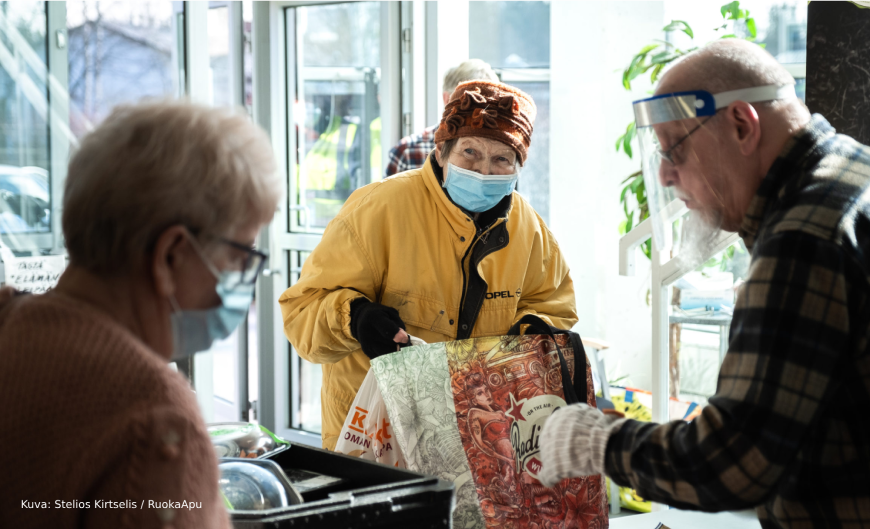
Foodaid.fi is a service for those seeking and organizing food aid – food bags provided to the needy. The website provides up-to-date information on food distributions, food aid events and hot meal opportunities in your chosen region.
These happenings are announced by the registered distributors of the food aid, so most announcements are written in Finnish. Each event listing includes details, such as location, dates, times and what type of event it is. The organizing party may also list additional services they offer, so make sure to check it out.
The Church Resources Agency, in collaboration with its partners, provides the Foodaid.fi service. Hundreds of organizations across Finland use the platform to organize various food aid events and community meals.
Flea markets, second-hand and thrift stores
Second-hand culture is a large part of Finnish society. People rent stalls from thrift stores to sell their own items, or the store either buys or receives gifted items to resell. Below are some thrift stores operating in Pori, where you can find low-cost second-hand items. Additionally, several websites and Facebook groups are available for buying and selling second-hand items.
There are numerous flea markets and second-hand stores in Pori. For the most up-to-date listings, you can check comprehensive listings of all area thrift stores, such as this one (Finnish only).
Online second hand in Finland
Facebook groups:
- Vaihtorinki (Sell, buy, trade group)
- International students in Pori
- Roskalava (Dumpster group – things people are ready to throw away, items are free)
- Rehdin kaupan reko Pori Group (farm to table food and product group – pick-up/purchase in SAMK parking lot on Thursdays!)
Kela Benefits
KELA stands for Kansaneläkelaitos, which directly translated, means the pension facility of the people. KELA is the Social Insurance Institution of Finland – covering most benefit payments to citizens and residents. Generally, in order to receive KELA benefits, you must be a permanent resident of Finland and be granted a municipality of residence by DVV.
However, every case is unique, so speak with one of their specialists to confirm if you can get a KELA card. If you belong to the Finnish social security system and have a KELA card, you can apply for financial assistance in various life situations. Check out the categories of benefits at Kela’s site, benefit categories are listed as Life Situations under the picture on the front page.